Roof Leak or Gutter Problem? How to Tell Where Rainwater Is Getting Into Your Home
You notice a brown ceiling mark after heavy rain. But is the roof leaking—or are overflowing gutters pushing water somewhere it shouldn't go?
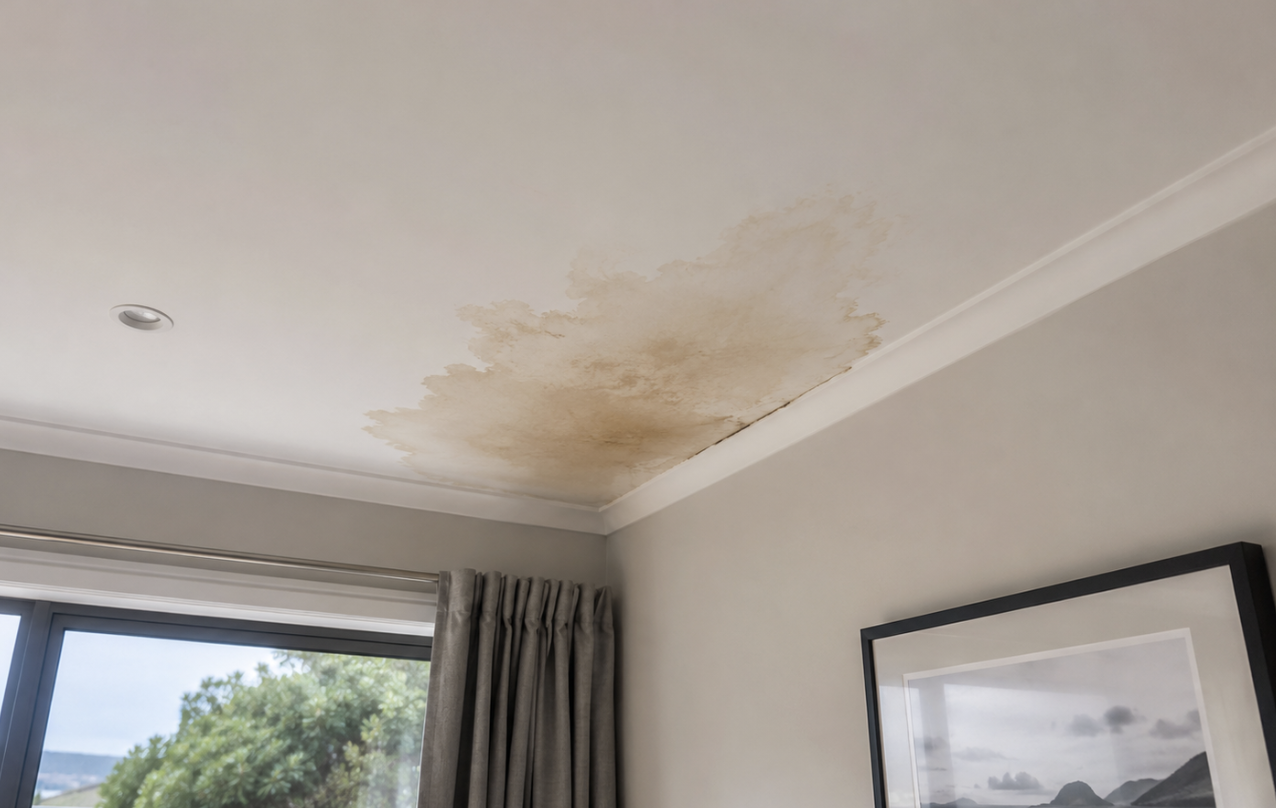
For a homeowner, the first sign of water inside the house can be worrying. A stain on the ceiling, dampness around a wall, water near a window or dripping during heavy rain can all suggest a roof problem.
But the point where you see the water inside your home is not necessarily where the problem started.
Rainwater can enter around roof tiles, flashing, valleys or roof penetrations. It can also come from overflowing gutters, leaking gutter joins or restricted downpipes. Once water gets into the roof or wall structure, it may travel before becoming visible inside.
That is why finding the actual source of the water is more important than simply treating the visible stain.
If you are dealing with a possible roof leak in Hobart, Kingston, Teroona here are some of the most common areas worth investigating.
First: When Does the Water Appear?
One of the first clues is when the problem happens.
Ask yourself:
Does the stain appear only after very heavy rain?
Does it happen during normal rainfall as well?
Does it happen when rain is driven by strong wind?
Is water appearing close to an outside wall?
Is the problem directly below a roof valley?
Does it happen near a chimney, skylight or roof penetration?
Have you noticed water overflowing from the gutters outside?
Does the gutter continue holding water after the rain stops?
These observations cannot diagnose the problem on their own, but they can help narrow down where an inspection should begin.
1. Damaged or Displaced Roof Tiles
On tiled roofs, one possible source of water entry is a damaged, cracked or displaced tile.
From ground level, the roof may look perfectly normal. However, even relatively small defects can allow wind-driven rain to reach areas underneath the roof covering.
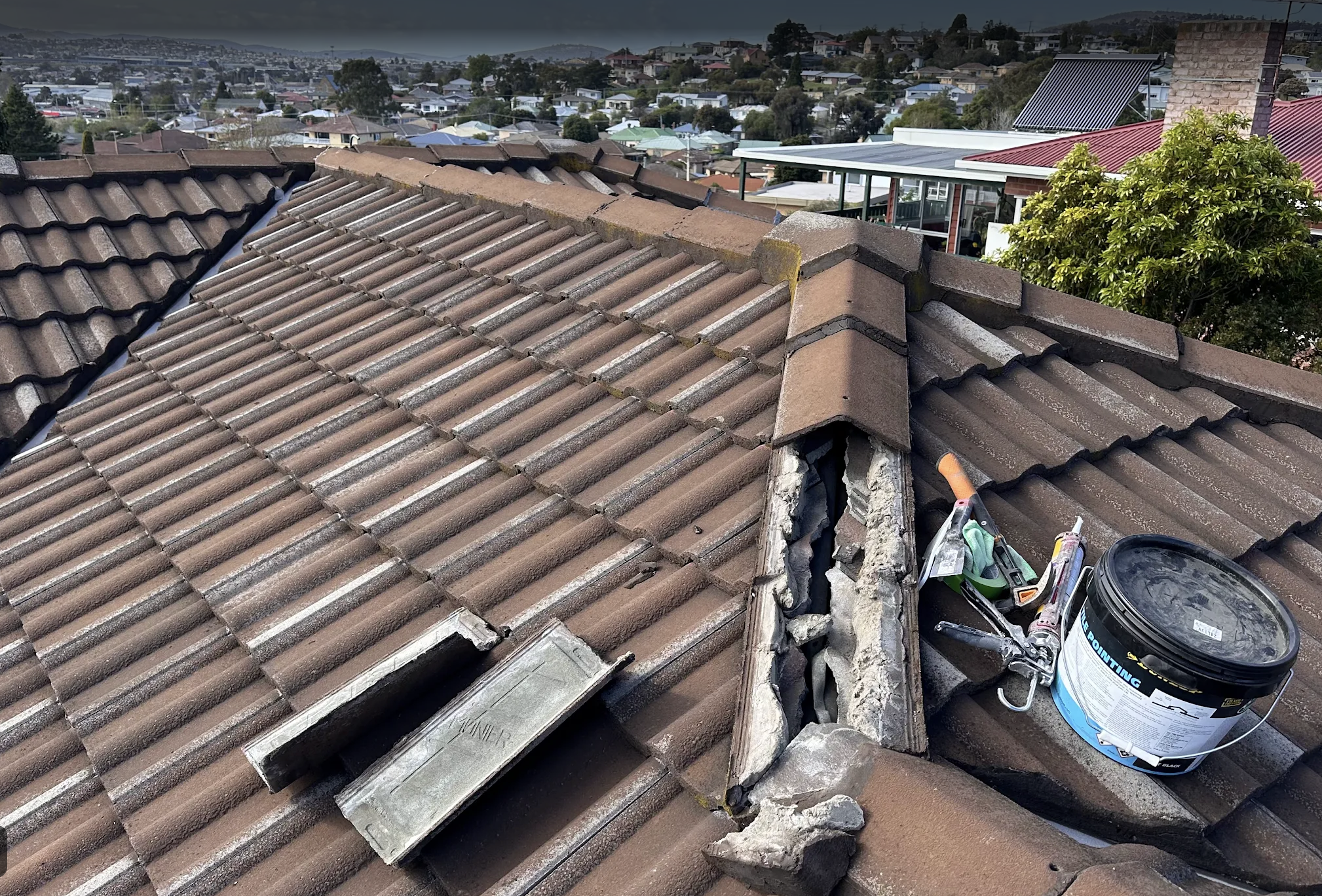
Potential issues can include:
cracked tiles
broken tiles
slipped or displaced tiles
damaged ridge areas
deterioration around roof penetrations
previous repairs that have started to fail
A water stain directly underneath the damaged area might seem obvious, but water does not always travel vertically.
Once underneath the roof covering, it can move along structural components before eventually dripping onto insulation or the ceiling below.
This is one reason why simply looking at the location of an internal stain may not identify the actual leak.
2. Flashing Problems
Flashing is used around areas where different roof surfaces or building components meet.
You may find flashing around:
chimneys
skylights
roof vents
wall-to-roof junctions
penetrations
valleys and other roof transitions
These areas are important because they help direct water away from vulnerable junctions.
If flashing becomes damaged, displaced, corroded or otherwise compromised, rainwater may find a path underneath the surrounding roofing.
A clue to look for
If the leak appears during wind-driven rain rather than every rainfall event, an exposed roof junction or flashing area may be worth investigating.
However, the roof should be properly inspected before assuming flashing is responsible.
3. Blocked Roof Valleys
Roof valleys collect rainwater from two adjoining roof sections and direct it towards the gutter.
This means a valley can carry a significant amount of water during rainfall.
Leaves, bark, moss and other debris can accumulate inside or around the valley. If water cannot move freely, it may spread into areas where it normally would not travel.
Possible valley problems include:
accumulated leaves and debris
moss or organic growth
damaged valley components
corrosion
restrictions near the bottom of the valley
water being unable to discharge properly into the gutter
A blocked valley can sometimes look like a roof leak even when the roof covering itself is not the main problem.
If your internal water mark appears below or close to a roof valley, the valley should be included in the inspection.
4. Overflowing Gutters
Sometimes the roof is not actually leaking.
The problem starts at the gutter.
When a gutter becomes filled with leaves, fine debris, sediment or organic material, its ability to collect and move rainwater can be reduced.
During heavier rainfall, water may then overflow.
Depending on the location and condition of the gutter system, water may run:
over the front of the gutter
toward the fascia
around gutter corners
behind or around parts of the gutter system
down exterior walls
into vulnerable areas around the eaves
From inside the house, the result may look very similar to a roof leak.
Signs that gutters may be involved
Look for:
water pouring over the gutter during rain
plants or weeds growing in gutters
visible leaves or debris
staining underneath the gutter
wet fascia areas
sagging gutter sections
gutters holding water after rain
water marks around corners or joins
If you are seeing these signs alongside an internal water problem, the gutter system should be inspected as part of the investigation.
5. Leaking Gutter Joins
Not every gutter leaking problem in Hobart is caused by a complete blockage.
Water can also escape around joins, corners, end sections or deteriorated parts of the gutter system.
You may notice water consistently dripping from the same location even when the rest of the gutter appears to be flowing normally.
The important question is what is causing the leak.
For example, the problem may involve:
deterioration around a join
movement within the gutter system
corrosion
damage to a section
water repeatedly sitting in one area
another drainage problem placing additional pressure on that location
Cleaning can expose areas that were previously hidden beneath sediment and debris, which is one reason inspection is useful alongside gutter cleaning.
If repair work involves components classed as roof-drainage plumbing, appropriately licensed practitioners may be required under Tasmanian requirements.
6. Blocked or Restricted Downpipes
A gutter can look relatively clean and still overflow if water cannot leave it quickly enough.
The restriction may be at the gutter outlet or further down the downpipe.
Leaves, fine organic matter and debris can collect around outlets and restrict water movement.
When that happens, rainwater can begin backing up inside the gutter.
During light rain, you might not notice anything unusual.
During heavy Hobart rain, however, the volume of water increases and the gutter may begin overflowing.
Possible signs of a restricted downpipe
gutter overflowing close to a downpipe
water sitting in the gutter after rainfall
very little water exiting the downpipe during rain
debris around the gutter outlet
repeated overflow in the same area
water spilling over even though much of the gutter looks clear
This is one reason simply removing visible leaves from the top of a gutter does not always solve a drainage problem.
The water flow through the complete gutter system also needs to be considered.
7. Water Sitting Inside the Gutters
After rain stops, most of the water should be able to move toward the drainage outlets.
If significant amounts of water remain in sections of the gutter, it may indicate something worth investigating.
Possible causes include:
accumulated sediment
blocked outlets
gutter movement or sagging
drainage restrictions
issues with the gutter's fall
damaged sections
Standing water can also keep organic material wet for longer periods.
Over time, that makes it more important to inspect the condition of the gutter underneath the debris—not just remove leaves from the surface.
8. Gutter Guards Can Hide Problems
A property with gutter guards is not necessarily maintenance-free.
Gutter guards can reduce the amount of larger material entering some gutter systems, but smaller particles, dust and organic material can still accumulate.
Because the gutter itself is partially covered, this build-up may be difficult to see from the ground.
This can create a frustrating situation for the homeowner:
The gutter appears protected, but water is still overflowing.
When investigating this type of problem, it may be necessary to assess what is happening under the gutter guard, particularly around outlets and areas where sediment has accumulated.
Why the Ceiling Stain May Not Be Directly Under the Leak
This is one of the most important things homeowners should understand.
Imagine water getting underneath part of the roof.
Instead of immediately dripping straight down, it may travel along another surface before reaching the ceiling.
The visible stain might therefore appear some distance away from the original entry point.
This can make roof-leak diagnosis difficult without inspecting the areas above and around the affected section.
It is also why repeatedly sealing the area directly above an indoor stain may not solve the problem if the true source is elsewhere.
Why a Roof and Gutter Inspection Should Look at the Whole Water Path
Rain starts on the roof, but it does not stop there.
A functioning system needs to move water through several stages:
Roof surface → valleys and roof junctions → gutters → outlets → downpipes → stormwater drainage
A problem anywhere along that path can change how water behaves.
That is why investigating only one component can sometimes miss the real cause.
At TAS Roof & Gutter Cleaning, we assess the condition of accessible roof and gutter areas and look for signs that may help explain where the water problem is coming from.
Depending on the property and issue, this may include looking at:
roof condition
roof tiles or metal roofing
valleys
visible flashing areas
roof penetrations
gutter condition
gutter joins
debris and sediment
gutter outlets
downpipe flow
signs of corrosion
areas where water is holding or overflowing
The goal is not simply to remove leaves.
It is to better understand how water is moving through the roof and gutter system and where that process may be failing.
Don't Wait for a Small Water Mark to Become a Bigger Problem
A small ceiling mark is easy to ignore when the weather becomes dry again.
But if the mark appeared because rainwater is entering somewhere it should not, the next period of heavy rain may bring the problem back.
Tasmania's State Emergency Service recommends keeping gutters and drains clear as part of reducing storm and flood risk.
Regular cleaning and inspection can also make it easier to identify developing gutter and roof issues before they become harder to manage.
If you have noticed:
water coming through your ceiling
gutters overflowing
persistent gutter leaks
water sitting inside your gutters
a suspicious ceiling stain
damaged roof areas
moss or debris around valleys
signs of corrosion
it may be time to have the roof and gutter system assessed.
Roof Leak Inspection and Gutter Inspection in Hobart
If you are experiencing a possible roof leak in Hobart, TAS Roof & Gutter Cleaning can assess the accessible roof and gutter areas and help identify the next appropriate step.
We can inspect the roof and gutter system for visible issues such as:
debris and blockages
restricted water flow
overflowing gutters
roof-valley build-up
gutter deterioration
water pooling
visible roof damage
areas that may require further professional assessment or repair
Where appropriate, we can also recommend whether the property would benefit from gutter cleaning, roof cleaning, further inspection or suitable repair work.
Not sure where the water is coming from?
Send us a few photos of your property, roof and affected area, together with a short description of what happens when it rains.
Our specialist can review the information and advise you on the recommended next step.
-
Look at what happens during rainfall. Visible water overflowing from gutters, water running down the fascia or overflow concentrated near a downpipe can indicate a gutter or drainage problem. Water entering around roof penetrations, valleys, tiles or flashing may indicate a roof issue. Because the symptoms can overlap, an inspection may be needed to identify the source.
-
Heavy rain increases the amount of water moving across the roof and through the gutter system. A partially restricted gutter, downpipe or valley may cope with lighter rainfall but overflow when water volume increases. Wind-driven rain can also expose vulnerabilities around roof junctions and flashing.
-
They can contribute to water problems. If a gutter or outlet cannot move rainwater effectively, water may overflow into areas around the fascia, eaves or other vulnerable parts of the building. The exact cause should be inspected rather than assuming the roof itself is leaking.
-
The restriction may not be visible from above. The gutter outlet or downpipe may be restricted, sediment may be present, water may be pooling, or another drainage issue may be affecting flow.
-
Yes. If water cannot leave the gutter efficiently through the outlet and downpipe, it can back up and eventually overflow during rainfall.
-
Possible reasons include debris, a restricted outlet, gutter sagging, drainage problems or issues with the gutter's fall. Persistent standing water is worth investigating.
-
Roof access carries fall risks, particularly when surfaces are wet, steep or slippery. Many useful observations can be made safely from ground level, including photographing overflowing gutters and visible roof damage. Where roof access is required, professional inspection is the safer approach.
-
Photos can provide useful initial information, particularly if they show the property, roof, affected ceiling area and what happens during rainfall. However, some problems cannot be confirmed from photographs alone and may require an on-site inspection after Complete 3-Stage Gutter Cleaning.
-
Regularly removing debris, checking water flow and inspecting the condition of gutters, outlets and accessible roof areas can help identify problems earlier. Pay particular attention after periods of heavy leaf fall or when you notice overflowing, standing water or changes in drainage.