Why Gutter Cleaning Is a Health Issue (Not Just a Chore) If You Drink Rainwater
If your household drinks water collected from your roof, your gutters aren't just part of your home's drainage system — they're the first filter standing between you and your drinking water. For the many Tasmanian households that rely on rainwater tanks instead of mains supply, a blocked or dirty gutter isn't a cosmetic problem. It's a direct pathway for contamination into the water your family drinks, cooks with, and bathes in.
This guide explains exactly how gutter condition affects rainwater quality, what the health risks actually are, and how often gutters should be cleaned to keep a rainwater supply safe — based on guidance from Tasmania's Department of Health and the National Construction Code.
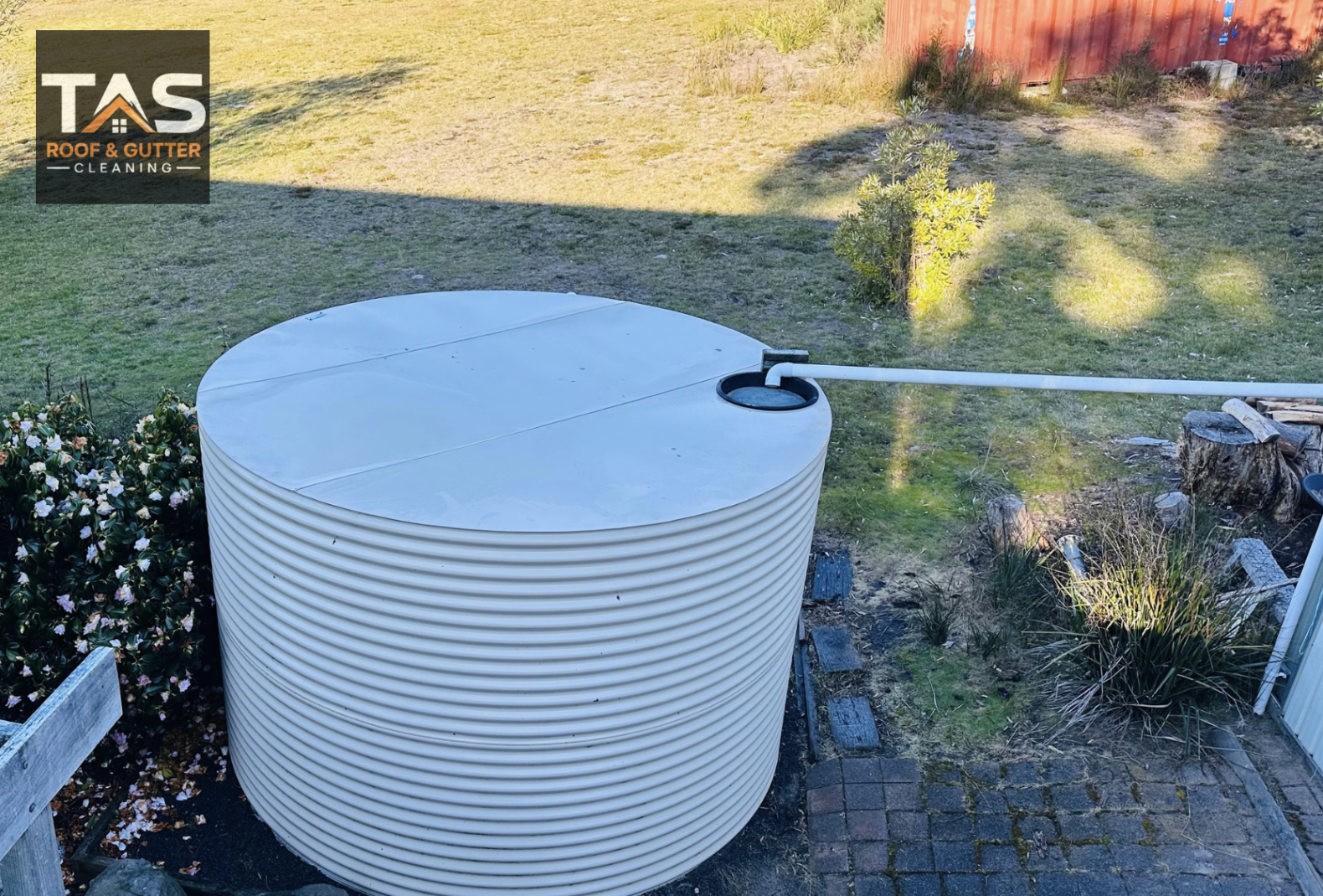
Rainwater storage tank connected to a roof drainage pipe, highlighting the importance of clean gutters in reducing leaves, dirt and debris entering the rainwater collection system.
Your Roof and Gutters Are the First (and Only) Filter Your Water Gets
Rainwater itself starts out clean. It picks up everything it touches on the way to your tap — and the roof and gutters are where most of that contamination happens. Every leaf, bit of bark, dead insect, and piece of bird or possum droppings that collects in your gutters sits there, breaking down, until the next rainfall washes it straight into your tank.
Tasmania's Department of Health is explicit about this: basic gutter and roof maintenance is recommended every three to four months, and if it isn't kept up, water quality can degrade to the point where it makes people sick. Heavy leaf litter from overhanging trees means it needs to happen even more often.
Put simply: a clean gutter is a water treatment step. A dirty one is a contamination source sitting directly above your drinking water supply.
The Real Health Risks of Neglected Gutters on a Rainwater System
This isn't a theoretical risk — it's a documented one. Contaminated rainwater tanks are linked to specific, well-understood health problems:
E. coli and other bacteria from bird and animal droppings washed off the roof — the presence of E. coli in a water sample is treated by health authorities as a sign that gutter and tank maintenance has broken down and needs urgent attention.
Cryptosporidium and other parasites, which can survive standard chlorination if levels aren't managed correctly.
Mosquito breeding, since water pooling in blocked gutters gives mosquitoes a place to lay eggs that then wash into the tank itself.
Decaying organic matter (leaves, moss, bark) that causes bad odour, discolouration, and off-tastes — often the first warning sign before more serious contamination.
Chemical residue, particularly from ageing roofing materials, old paint, or nearby industrial dust, which can accumulate in gutter sediment and wash through with every rain event.
Households with young children, elderly residents, pregnant women, or anyone with a compromised immune system are considered most at risk from contaminated rainwater — which is exactly why Tasmanian health authorities call out gutter maintenance as a frontline safety measure, not an optional extra.
How Contamination Actually Gets Into Your Tank
It's a short, direct path:
Leaves, droppings, and debris accumulate in the gutter.
Organic material starts to break down, and bacteria multiply in the damp, sheltered environment.
Rain washes the contaminated runoff straight down the downpipe.
Without a well-maintained first-flush diverter and clean inlet screens, that runoff goes directly into your drinking water tank.
This is why building standards require gutters fitted to rainwater harvesting systems to be kept free of leaves, dust, and animal matter, with screens or leaf diverters in place between the roof and the tank. The system is only as clean as its weakest link — and an overflowing, sludge-filled gutter is almost always that weak link.
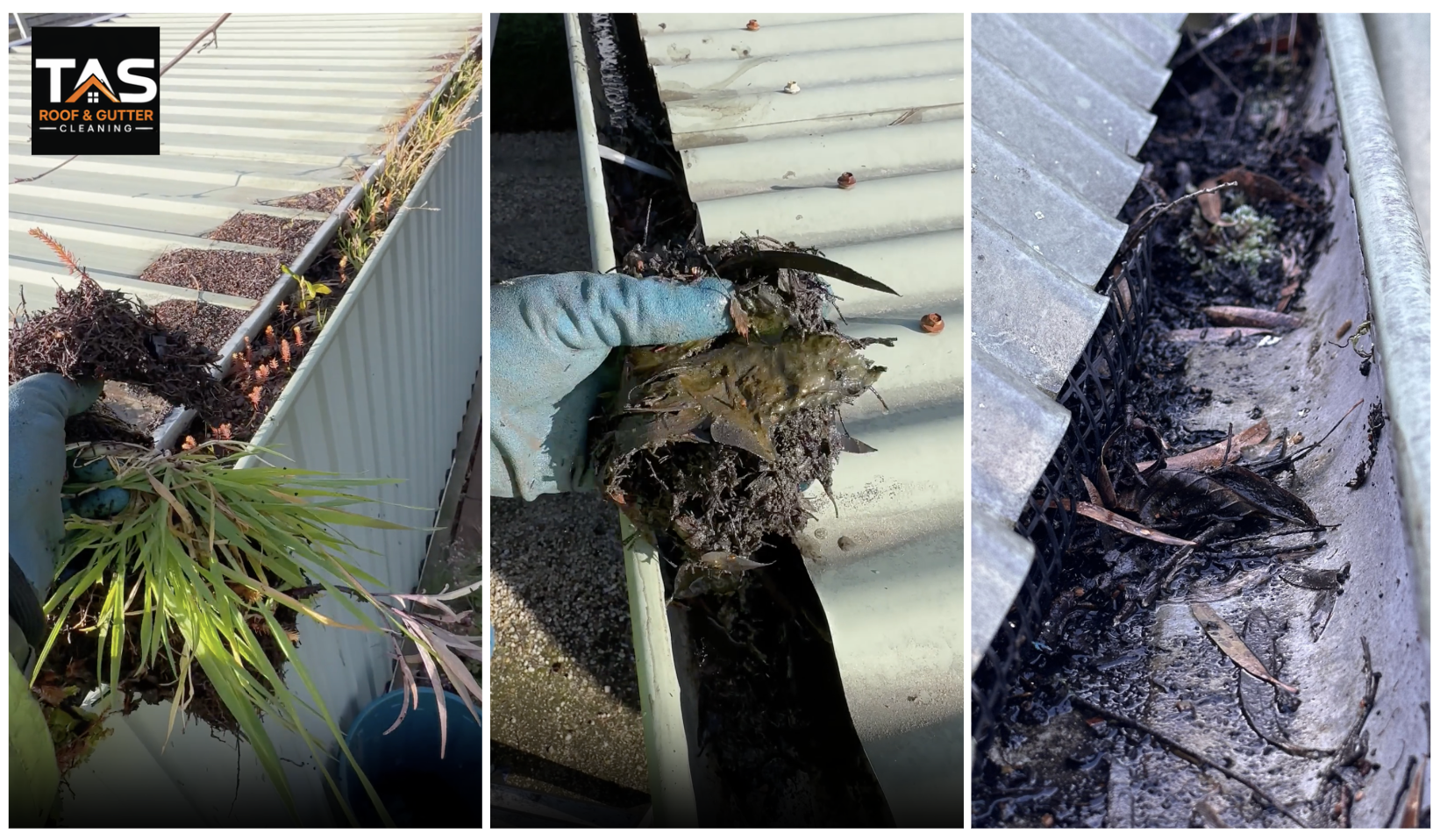
Gutter cleaning by TAS Roof & Gutter Cleaning, showing grass, roots and compacted debris being removed, with wet leaves and sludge built up inside the gutters.
How Often Should Gutters Be Cleaned for a Rainwater Drinking Supply?
For households drinking rainwater, the standard advice from Tasmanian health authorities is:
Every 3–4 months as a baseline, more often if you have overhanging trees or heavy leaf fall.
After major storms or high winds, when debris loads spike suddenly.
Before the wet season, to make sure the system starts clean going into the months when the tank is being filled most.
Tank desludging every 2–3 years, separate from gutter cleaning, to remove sediment that settles at the base of the tank over time.
This is meaningfully more frequent than gutter cleaning recommendations for homes on mains water, where cleaning is often about preventing overflow and roof damage rather than protecting a drinking supply.
Warning Signs Your Gutters Are Putting Your Water at Risk
Water sitting or pooling in the gutter instead of draining freely
Visible sludge, leaf mulch, or dark organic buildup
A musty, earthy, or "off" smell near the downpipes
Discoloured or unusually tasting tap water
Overflow marks or staining on the fascia
Increased mosquito activity around the eaves after rain
If you notice any of these, it's worth treating it as a water safety issue, not just a maintenance one.
Why Professional Cleaning Matters More on a Rainwater System
DIY gutter clearing with a garden hose from a ladder can miss exactly the material that matters most for water safety — fine sediment, decomposed organic sludge, and debris packed into corners and downpipe openings. A professional clean for a rainwater-fed home should include:
Full clearance of leaves, sludge, and debris from gutters and valleys
Inspection and clearing of downpipes and inlet screens
Checking that first-flush diverters are working correctly
Flagging any roofing material issues (old paint, rust, flashing) that could affect water quality
A clear report so you know your system is protecting your drinking water, not compromising it
This is the standard TAS Roof & Gutter Cleaning applies on every rainwater-tank property — because for these homes, the job isn't just about keeping gutters tidy, it's about keeping the household's drinking water safe.
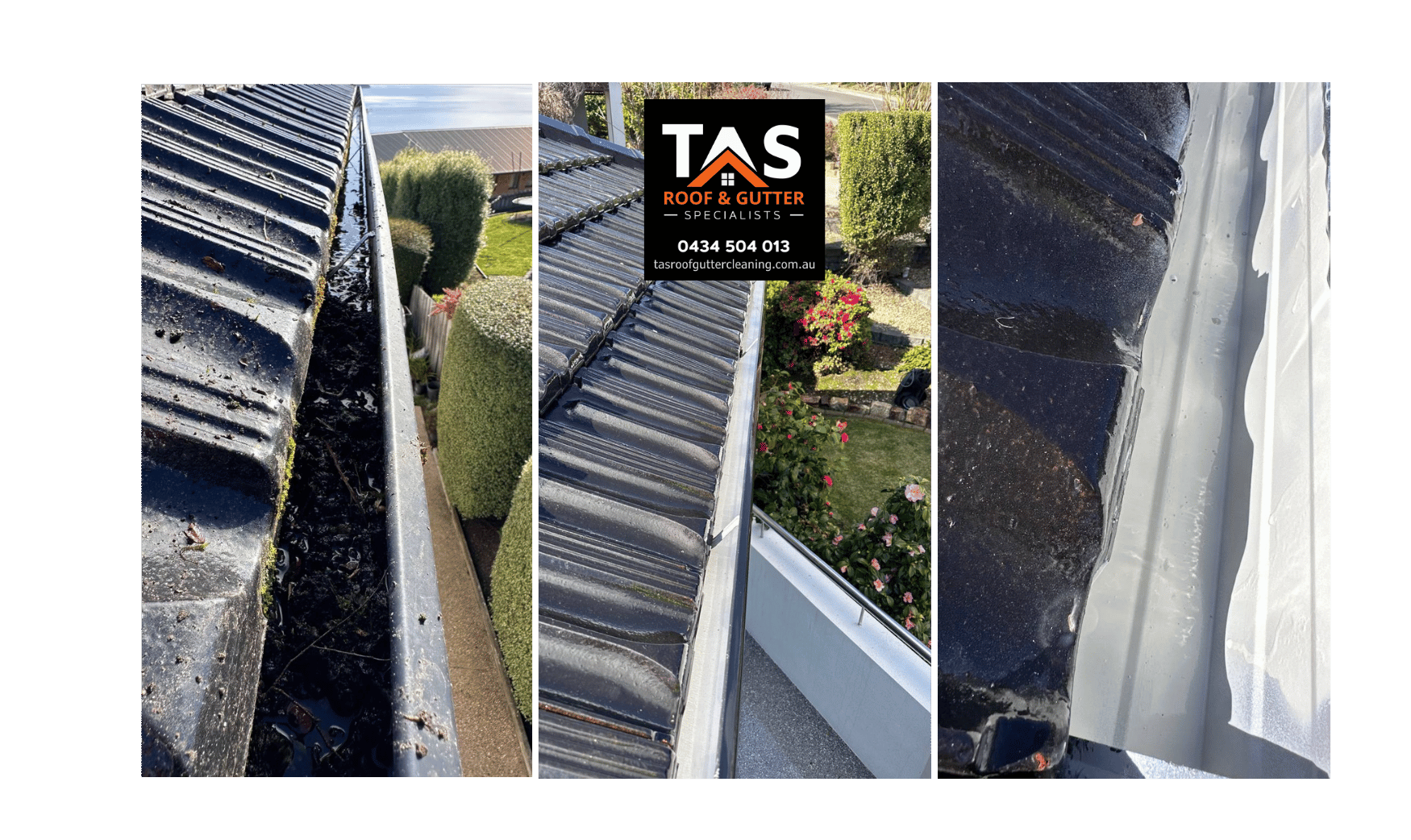
Before-and-after gutter cleaning by TAS Roof & Gutter Cleaning, showing accumulated sludge and debris before removal and a clean gutter channel beside a tiled roof after the service.
Rainwater Safety Checklist
Gutters cleaned every 3–4 months (more often with overhanging trees)
Gutter mesh or leaf guards fitted and intact
First-flush diverter installed and functioning
Downpipe inlet screens clear of debris
No overhanging branches dropping leaf litter onto the roof
Tank checked for sludge buildup every 2–3 years
Water tested periodically, especially after storms or visible contamination
Immediate action (cleaning, chlorination) taken if water smell, taste, or clarity changes
Frequently Asked Questions
-
Rainwater can be an excellent, clean drinking water source in Tasmania, but its safety depends entirely on how well the collection system — roof, gutters, screens, and tank — is maintained. Poor gutter maintenance is one of the most common causes of contaminated rainwater supplies.
-
Tasmanian health guidance recommends basic gutter and roof maintenance every 3 to 4 months, with more frequent cleaning needed if your property has significant tree cover or heavy leaf fall.
-
Debris and droppings build up and break down in the gutter, and the next rainfall carries that contamination straight into your tank.
This can introduce bacteria such as E. coli, cause bad odour or taste, and in some cases make the water unsafe to drink without disinfection.
-
Yes. Contaminated rainwater linked to poorly maintained roofs and gutters has been associated with bacterial and parasitic illness.
Health authorities recommend chlorinating the tank and identifying the contamination source if E. coli or illness is detected.
-
It's strongly recommended. A professional clean reaches sediment and blockages that DIY methods often miss, and ensures screens and first-flush diverters — the components that actually protect your drinking water — are working properly.
TAS Roof & Gutter Cleaning specialises in gutter maintenance for Hobart and Tasmanian homes on rainwater tank systems. If your household drinks water straight from your roof, book a clean built around water safety, not just tidy gutters.
You will receive a personal quotation in 24 hours.